

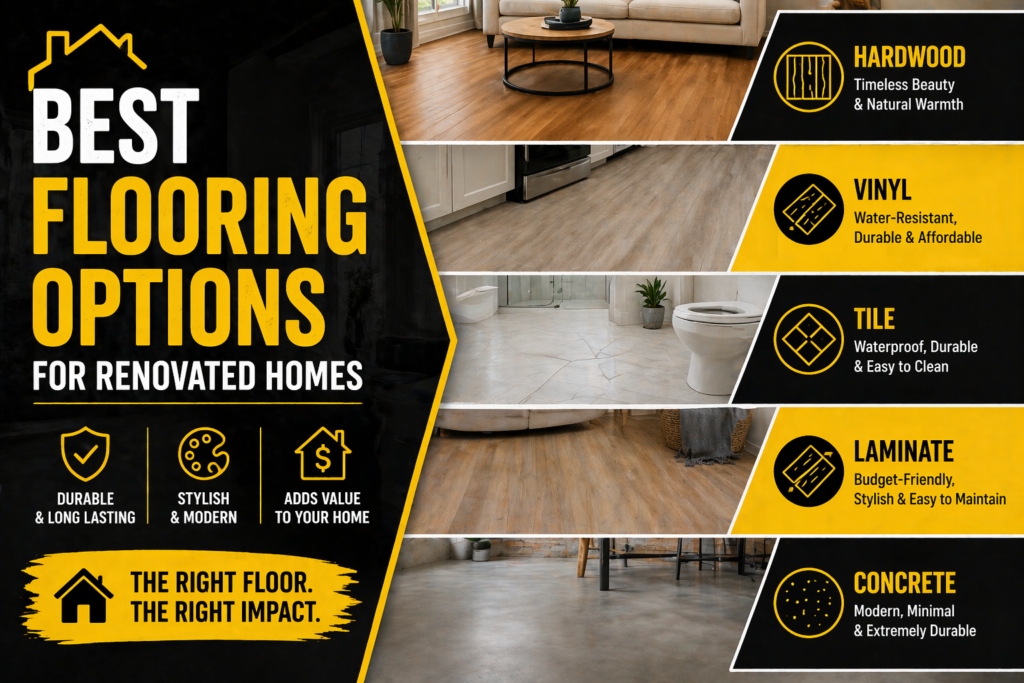
Flooring is one of those decisions homeowners often underestimate—until it’s too late. It sits under everything, gets used every single day, and quietly shapes how a home looks and feels. When you’re renovating, choosing the right flooring isn’t just about style. It’s about durability, maintenance, comfort, and how well it fits your lifestyle.
The truth is, there’s no single “best” flooring option. The right choice depends on where it’s going, how it will be used, and what kind of long-term value you’re aiming for. Let’s break down the best flooring options for renovated homes that homeowners are choosing today—and why.
Hardwood Flooring: Timeless but Demanding
Hardwood flooring has always been associated with quality. It brings warmth, natural texture, and a classic look that doesn’t go out of style. Homes with hardwood floors often feel more premium, and it can increase resale value.
But hardwood isn’t perfect.
It can scratch, it reacts to moisture, and it requires maintenance over time. That makes it better suited for living rooms, bedrooms, and dining areas rather than kitchens or basements.
Homeowners who want a cohesive upgrade often include hardwood as part of larger projects like full house renovation services to maintain consistency across the home.
Vinyl Flooring: Practical and Versatile
Vinyl flooring has improved significantly over the years. Modern luxury vinyl planks (LVP) and tiles (LVT) can closely mimic wood or stone while offering much better resistance to water and wear.
This makes vinyl one of the most practical choices for:
- Kitchens
- Bathrooms
- Basements
- High-traffic areas
It’s also relatively affordable and easy to maintain, which is why many homeowners prefer it for busy households.
If you’re renovating areas like kitchens, pairing durable flooring with smart layouts through kitchen renovation services can create a space that looks good and performs well daily.
Laminate Flooring: Budget-Friendly Alternative
Laminate flooring is often chosen by homeowners who want the look of wood without the higher cost. It’s durable, resistant to scratches, and easy to install.
However, laminate has one major limitation—it doesn’t handle moisture well. This makes it less suitable for bathrooms or basements unless special waterproof versions are used.
For dry areas like bedrooms or hallways, laminate can be a solid and cost-effective option.
Tile Flooring: Durable and Water-Resistant
Tile is one of the most durable flooring options available. It’s highly resistant to water, stains, and heavy use, which makes it ideal for:
- Bathrooms
- Kitchens
- Entryways
Porcelain and ceramic tiles are the most common choices, and they come in a wide range of styles. Some even replicate natural stone or wood textures.
The downside? Tile can feel cold and hard underfoot. In colder climates, homeowners often pair it with underfloor heating for added comfort.
Engineered Wood: A Balanced Option
Engineered wood flooring offers the appearance of hardwood but with better resistance to moisture and temperature changes. It’s made with a real wood surface layer over a stable core, which makes it less likely to warp.
This makes it a good middle-ground option for homeowners who want the look of wood without the full maintenance concerns.
It works well in living spaces and even some kitchens, depending on the installation and finish.
Carpet: Comfort Over Style
Carpet has become less popular in main living areas, but it still has its place—especially in bedrooms. It provides warmth, softness, and sound insulation, making it ideal for private spaces.
However, carpet requires regular cleaning and is more prone to stains and wear. That’s why most homeowners avoid it in high-traffic or moisture-prone areas.
Concrete Flooring: Modern and Minimal
Concrete flooring is gaining attention in modern renovations, especially for basements and contemporary homes. It offers a clean, industrial look and is extremely durable.
Polished concrete can be customized with different finishes, stains, or textures. It’s also low maintenance and works well with underfloor heating systems.
If you’re considering basement upgrades, combining flooring choices with ideas from Basement Renovation Ideas That Increase Property Value can help you create a space that is both stylish and functional.
Choosing Flooring Based on Lifestyle
Instead of asking “what’s the best flooring,” a better question is: what’s the best flooring for how you live?
For example:
- If you have kids or pets → go for scratch-resistant options like vinyl
- If you want a luxury feel → hardwood or engineered wood
- If moisture is a concern → tile or vinyl
- If comfort matters most → carpet in specific areas
Your daily habits should guide your decision more than trends.
Mistakes to Avoid When Choosing Flooring
Flooring mistakes can be expensive to fix, so it’s worth getting it right the first time.
One common mistake is choosing style over practicality. A material might look great but fail under daily use.
Another mistake is ignoring long-term maintenance. Some materials require more care than others, and not planning for that can lead to frustration later.
Learning from renovation insights like Kitchen Renovation Mistakes Homeowners Often Regret can help you avoid decisions that seem good initially but cause problems over time.
Mixing Flooring Types the Right Way
Modern homes rarely use a single flooring type throughout. Instead, homeowners mix materials based on room function.
For example:
- Hardwood in living areas
- Tile in bathrooms
- Vinyl in kitchens and basements
The key is to maintain visual consistency. Choose colors and textures that complement each other rather than clash.
Transitions between different flooring types should also be smooth to maintain a cohesive look.
Long-Term Value of Good Flooring
Flooring is not just a design choice—it’s an investment. High-quality flooring can:
- Increase property value
- Improve comfort and usability
- Reduce maintenance costs over time
Cutting corners on flooring often leads to replacements sooner than expected, which ends up costing more in the long run.
Final Thoughts
Choosing the right flooring for a renovated home comes down to balancing style, durability, and practicality. There’s no one-size-fits-all solution, but understanding the strengths and limitations of each option makes the decision much easier.
Whether you prefer the timeless appeal of hardwood, the practicality of vinyl, or the durability of tile, the goal is to choose flooring that fits your lifestyle and long-term plans.
If you’re planning a renovation and want expert guidance on materials and design, you can explore your options by visiting Affordable Renovation Contractor. The right flooring choice doesn’t just complete your renovation—it defines how your home feels every day.